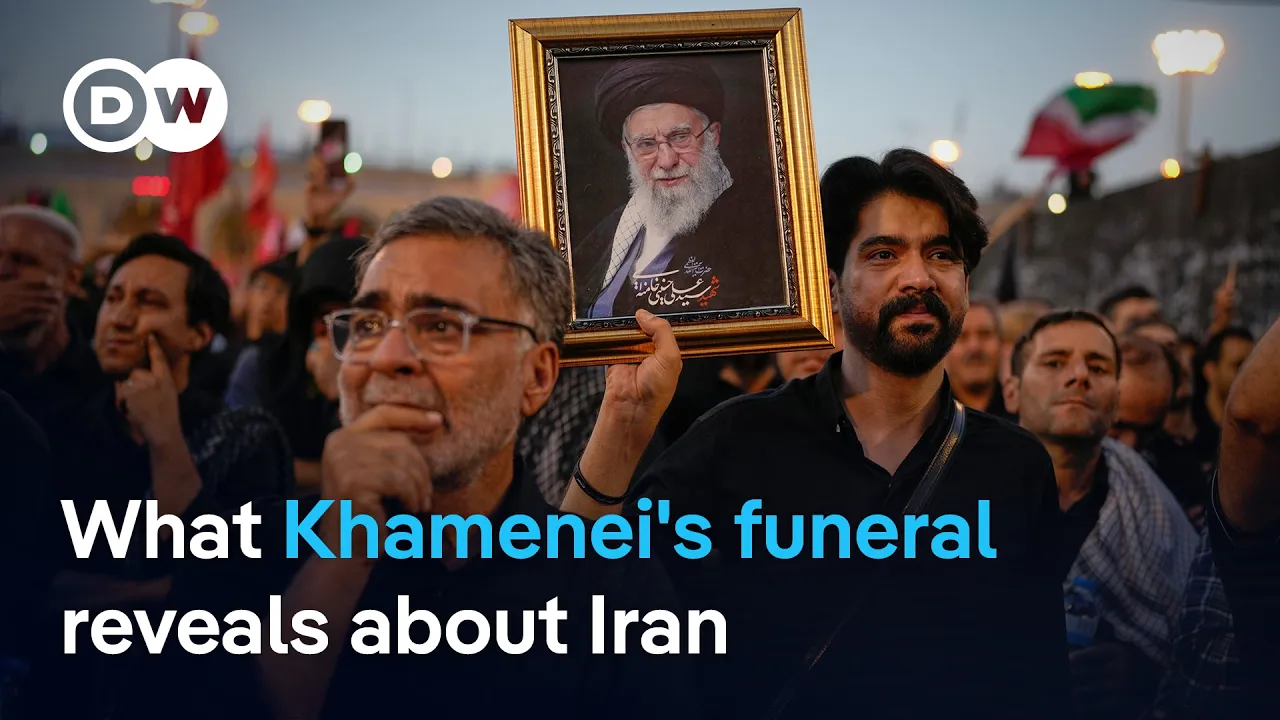

The funeral of Iran's former Supreme Leader Ali Kanei has provided a unique opportunity to assess the country's current leadership dynamics. The announcement of a new Supreme Leader, who has not been seen in public, has raised questions about the legitimacy of the regime and the role of the new leader. The funeral ceremony, which is being held over several days, is a carefully choreographed event designed to project unity and resilience in the face of adversity. The appearance of new faces in Iran's military and political leadership suggests that there may be significant changes in the country's decision-making process.
The absence of the new Supreme Leader has sparked speculation about his health and whether he is truly in charge. According to experts, the regime's attempt to project strength despite its weakness is a sign of contradiction. The Islamic Revolutionary Guard Corps and the Supreme National Security Council are key organizations that will shape Iran's future. The regime's ability to engage in information warfare and ideological warfare is also crucial. The balance of power between different organizations and the factions within the regime will determine the country's trajectory. The regime's confidence and hubris could lead to another war.
In conclusion, the funeral of Iran's former Supreme Leader has provided a glimpse into the country's complex leadership dynamics. The absence of the new Supreme Leader has raised questions about his role and influence. The regime's attempt to project strength despite its weakness is a sign of contradiction. The future of Iran is uncertain, but it is clear that the regime will continue to play a significant role in the country's politics. The international community will be watching the situation closely, as the consequences of the regime's actions could have far-reaching implications.