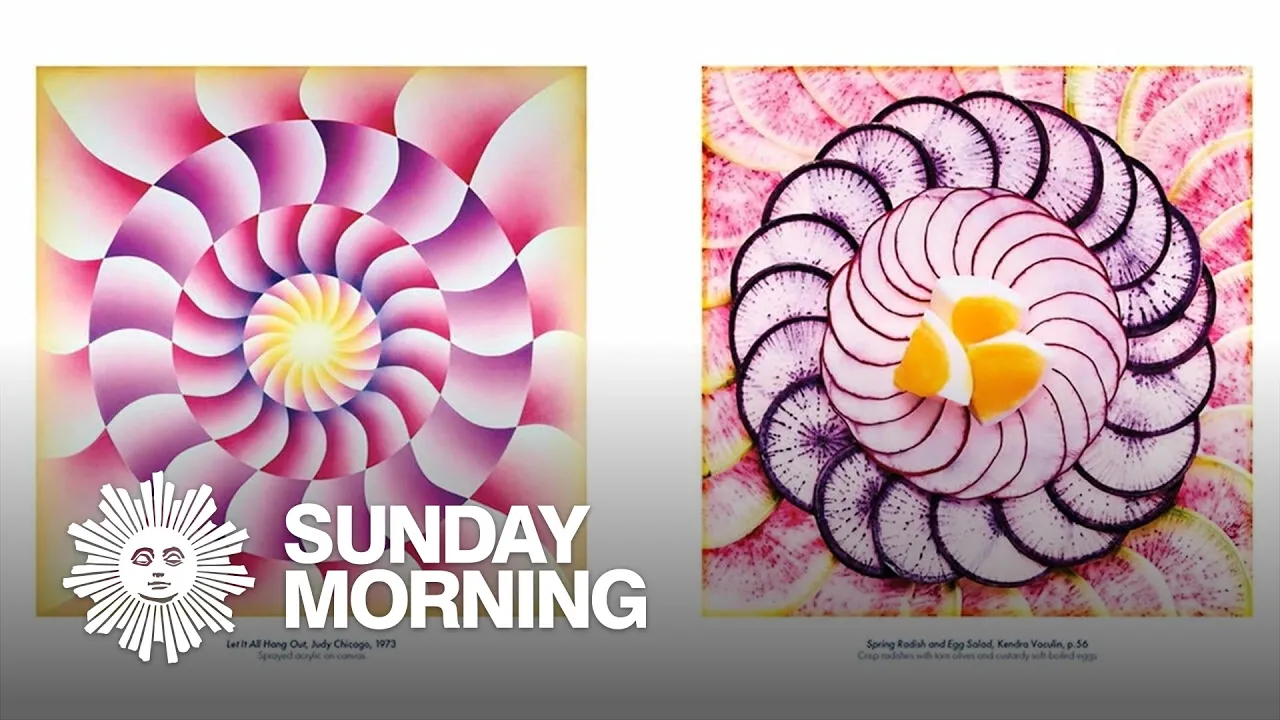

The recent issue of Bon Appetit magazine presents a nuanced exploration of the symbiotic relationship between culinary art and visual art, as it features recipes that are meticulously crafted to emulate notable works of art. A 1963 abstract painting by Helen Frankenthaler, for instance, has been reimagined as a precarious falafel burger, with chickpea patties and pickled onions, thereby exemplifying the transfiguration of art into food. Meanwhile, a minimalist canvas by Agnes Martin has been reinterpreted as a dish of burnished scallops, served in a pool of lemon infused spinach sauce, which showcases the magazine's ability to metamorphose art into a culinary experience.
The magazine's endeavor to merge the realms of food and art is a testament to the creative potential that arises when different disciplines intersect. By employing vocabulary such as infused and burnished, the magazine's writers demonstrate a profound understanding of the nuances of both culinary and visual art. The dishes featured in the magazine are not only colorful and visually appealing but also pay tribute to the pioneering artists who inspired them, such as Wayne Thiebaud, whose 1979 work, Cake Slice, has been refashioned into a vanilla, chocolate, and strawberry cake. The magazine's use of ingredients such as sour cream frosting and pickled onions adds a layer of complexity to the dishes, making them a true masterpiece of culinary art. Furthermore, the magazine's exploration of the intersection of food and art raises important questions about the nature of representation and recontextualization in the culinary arts, and how these concepts can be used to create new and innovative culinary experiences. The magazine's ability to subvert traditional notions of food and art is a testament to its innovative approach to culinary storytelling.
Ultimately, the magazine's new issue offers a compelling exploration of the symbiotic relationship between food and art, demonstrating that the two disciplines are not mutually exclusive, but rather complementary aspects of a larger cultural landscape. By embracing the abstract and the minimalist, the magazine's writers and chefs have created a truly innovative and creative culinary experience that will inspire readers to rethink their understanding of the intersection of food and art. The magazine's use of vocabulary and ingredients is a key aspect of its ability to transcend the boundaries between food and art, and to create a new and innovative culinary language.