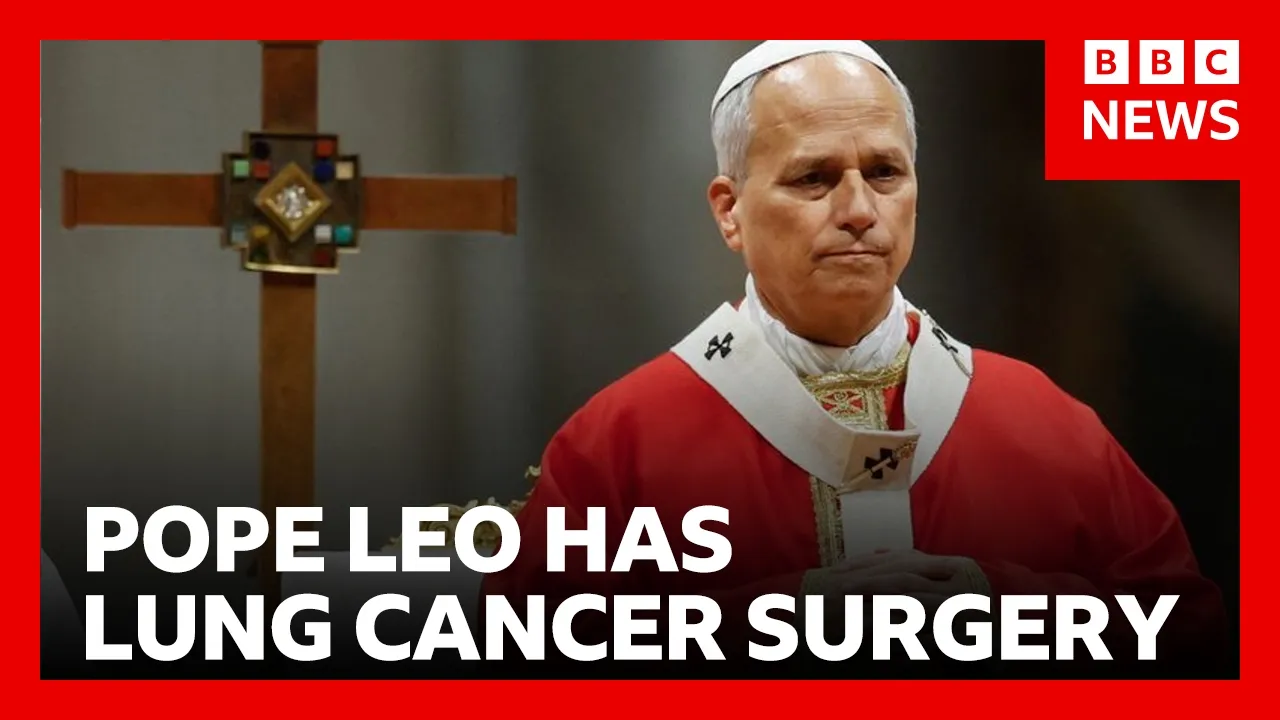

When institutional secrecy gives way to unvarnished medical reality, the impact resonates far beyond church walls. Pope Leo XIV has acknowledged his diagnosis of pulmonary adenocarcinoma following a decisive surgical resection at Rome's Gemelli Hospital. The candor surrounding the 71-year-old pontiff's condition reminds you that even the most venerated figures remain fundamentally mortal.
The malignant nodule was caught entirely by happenstance during standard prophylactic evaluations, presenting as an asymptomatic anomaly without fever, cough, or physical distress. Arriving at the clinic amidst throngs of well-wishers who had held vigil on the pavement for hours, the pontiff demurred from dramatic overtures, offering only a breezy wave through an open car window and a philosophic shrug when staff voiced their condolences. Inside the operating theater, surgeons spent an intense 90 minutes performing an anatomical lobectomy, excising the lower lobe of his right lung to maximize surgical clearance and preempt microscopic seeding. Histological assays subsequently corroborated their initial clinical suspicions, affirming the nodule's malignant etiology. Pathologists are presently conducting exhaustive staging biopsies to ascertain whether any peripheral lymphatic dissemination has occurred. Given his robust baseline constitution and the absence of pre-existing systemic infirmity, the surgical intervention affords a favorable clinical trajectory, though such invasive thoracic procedures inevitably disrupt a rigorous pastoral calendar.
Balancing spiritual governance with the arduous demands of postoperative care will inevitably test the pontiff's endurance. Yet by confronting this oncological challenge with public composure, Pope Leo offers a portrait of quiet equanimity that will reassure observers as his medical team oversees his recovery.

