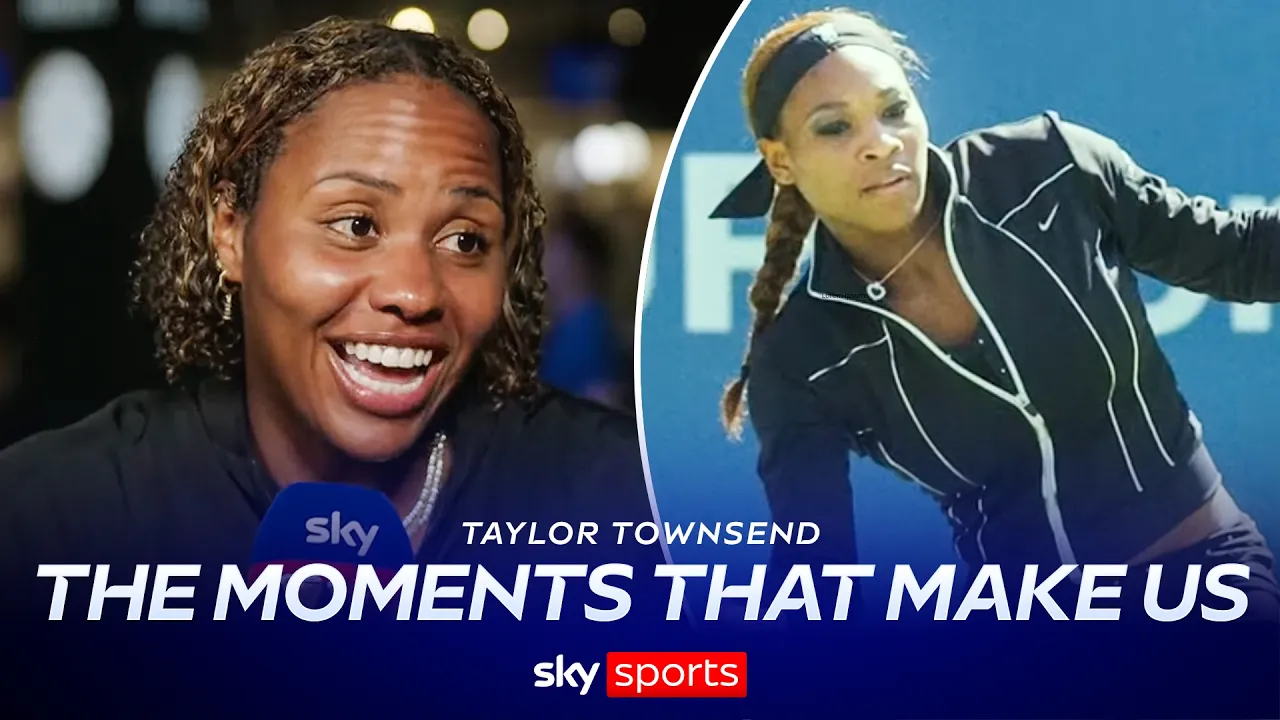

Cultural shifts within elite athletics rarely occur by gentle persuasion; they require an uncompromising force willing to shatter established orthodoxies. For Taylor Townsend, watching Serena Williams ascend the tennis pantheon was not simply an exercise in spectatorship, but an indelible awakening to the emancipatory potential of sport.
Sitting down with Sky Sports to commemorate Black History Month, Townsend deconstructed the subversive brilliance of Williams’s dominance across three decades. Tennis had long guarded its country-club pedigree, wrapping its institutional conservatism in genteel decorum. Serena disrupted that hegemony overnight, matching peerless baseline velocity with an audacity that refused to bow to aesthetic or cultural policing. Townsend notes that watching a Black woman wield such undisputed authority on world sport’s grandest stages broke the psychic ceiling for an entire cohort of junior players. When Townsend encountered her own bureaucratic and paternalistic hurdles early in her career—most notably regarding physical conditioning standards—she drew directly on the playbook Williams had authored through decades of hostility. Serena never sought consensus; she accumulated hardware and commanded deference purely through athletic excellence. That posture gave Townsend license to reject dogmatic orthodoxy, nurture her bespoke attacking style, and develop an armor of equanimity under intense tournament pressure. Seeing someone neutralize systemic resistance transforms your understanding of personal agency. It proves that lasting influence is not merely about accumulating titles, but about executing an unyielding, insurgent reclamation of the competitive arena on your own uncompromising terms.
Townsend’s testimony underscores how genuine pioneers leave behind far more than statistics; they leave a blueprint for generational autonomy. When you step onto the court unburdened by outside expectations, you fulfill the radical promise of those who transcended the game before you.

