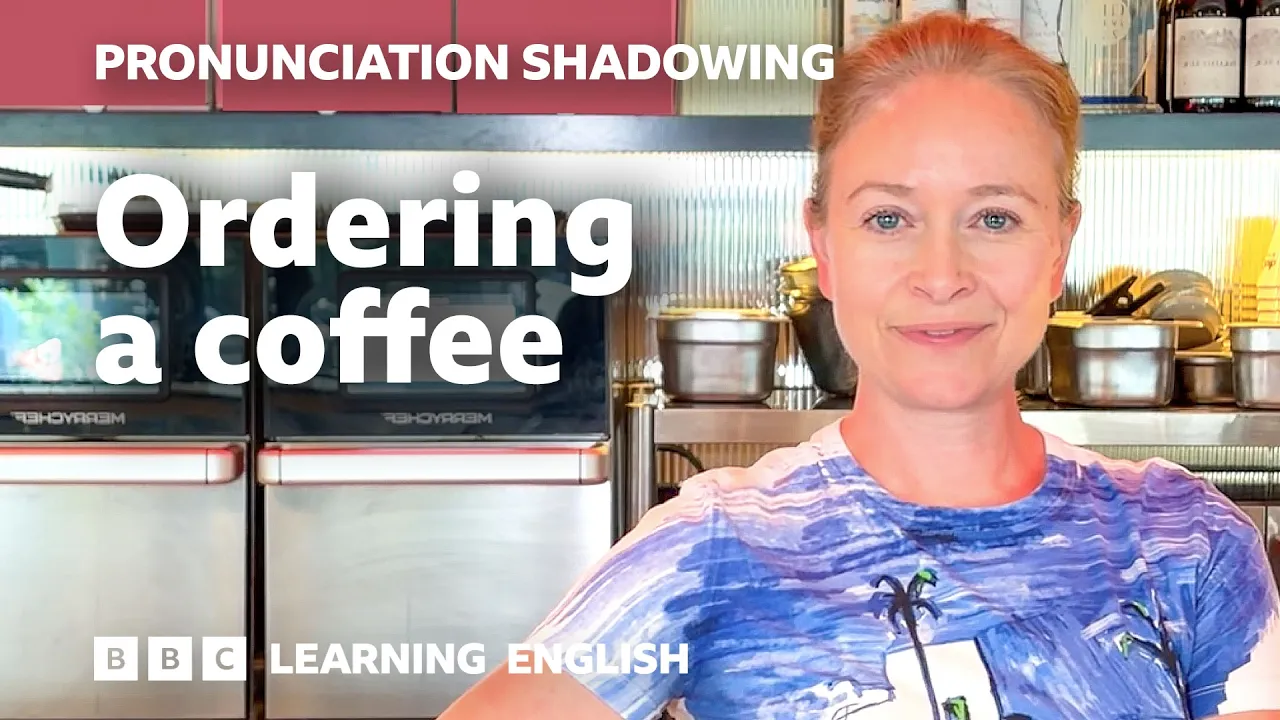

Everyday vernacular English thrives on phonetic efficiency, creating a continuous acoustic stream that frequently baffles language learners accustomed to textbook clarity. When you step inside a bustling cafe, pristine grammar gives way to spontaneous phonological shifts and subtle coarticulation. A recent BBC Learning English instructional release led by educator Becca zeroes in on this discrepancy, using practical service counters as a laboratory for spoken fluency.
At the center of Becca’s lesson is the mechanical transformation that takes place during high-frequency social prompts. Interrogative constructs like "would you" undergo rapid palatalization, where adjacent dental and palatal sounds merge into an affricate that sounds entirely distinct from its isolated lexical parts. Similarly, auxiliary verbs routinely undergo vowel reduction, stripping away emphasis to preserve conversational momentum. When non-native speakers miss these nuances, spontaneous customer interactions can feel intimidating. To counter this, Becca champions speech shadowing—a demanding cognitive exercise where the student reproduces spoken input with minimal latency. This technique trains the vocal apparatus to match subtle inflection, authentic breath pauses, and natural tempo without intermediate cognitive filtering. Instead of analyzing grammar tables, your brain recalibrates to recognize how acoustic cues coalesce into intelligible units amid distracting background noise. Shadowing eliminates artificial staccato pacing, steering speakers toward an organic delivery that mirrors native-level spontaneity. By repeatedly modeling conversational exchanges, learners refine both perceptual acuity and oral output in tandem.
Navigating mundane public transactions in a foreign tongue requires an ear finely tuned to casual vernacular. Internalizing these micro-level phonetic behaviors ensures that your next coffee order is characterized by genuine poise rather than rehearsed anxiety.

