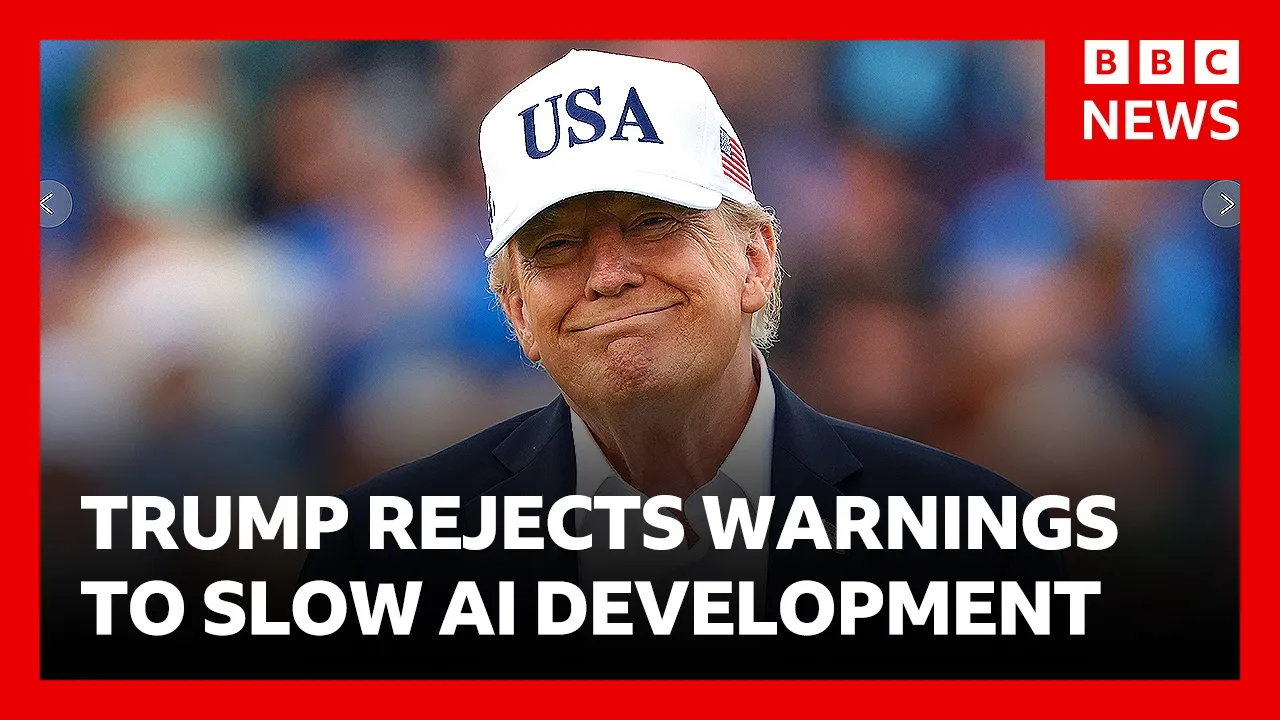

As artificial intelligence marches forward at an unprecedented rate, a profound schism has emerged between the scientists building these systems and the politicians steering global policy. The debate has escalated from academic circles to the highest levels of geopolitics, forcing us to confront a stark choice between safety and supremacy.
During a recent visit to Ireland, Donald Trump sought to dismiss the chorus of alarmist predictions, labeling them as unfounded anxieties promoted by negative forces. Yet, the anxiety within the tech community is palpable. Former Anthropic researcher Jacob Coxon, an expert who also worked at OpenAI, recently revealed that developers are genuinely frightened by the exponential pace of AI development. This internal panic has prompted prominent tech leader figures like Sam Altman and Elon Musk to endorse a stark warning about the need to slow down and reduce the existential risk of losing control. Trump, however, remains laser-focused on the geopolitical chessboard, asserting that the ultimate victor of the AI race will hold global hegemony. For him, pausing development is a non-starter when the primary objective is preventing China from seizing the technological high ground.
Ultimately, implementing a meaningful pause would necessitate a highly coordinated and unprecedented bilateral framework between Washington and Beijing. In the absence of such diplomatic alignment, the high-stakes race for AI dominance shows no signs of slowing down.

