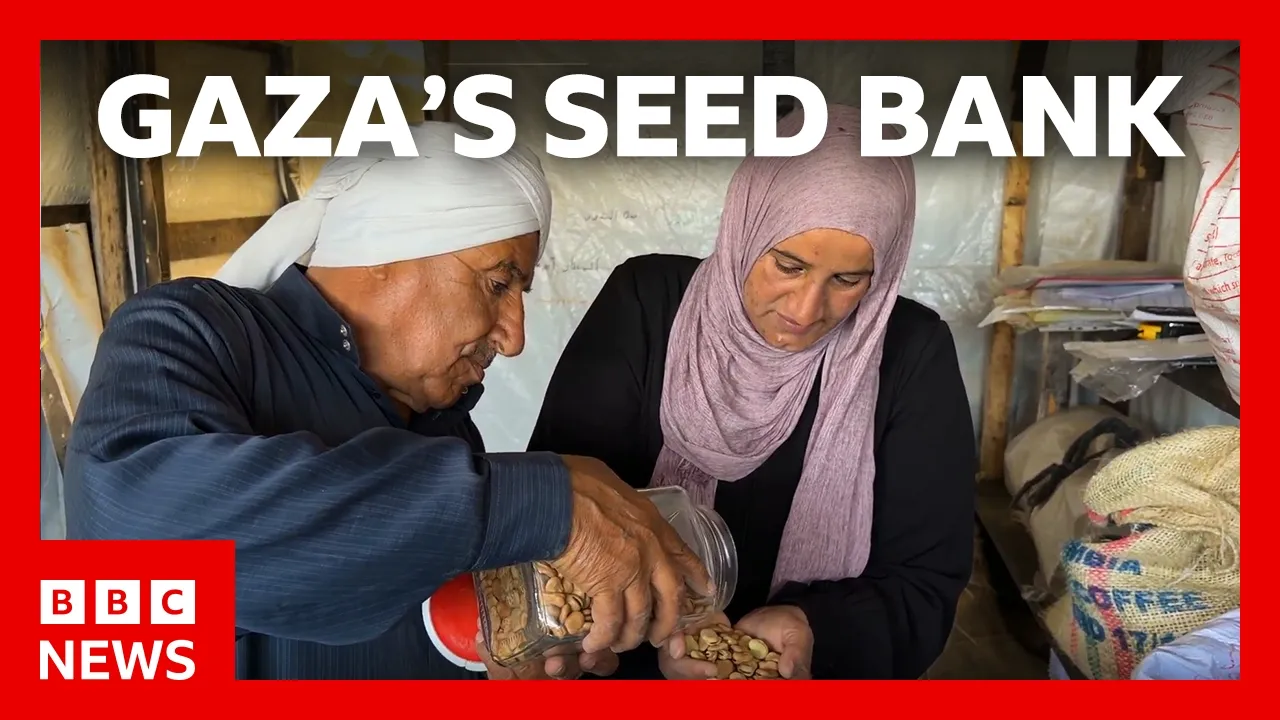

The war in Gaza has had a devastating impact on the region's infrastructure and food supply. As a result, many residents have turned to farming to feed themselves. A small seed bank, funded by the International Committee of the Red Cross, is providing some support to farmers. The seed bank was started by Salama Muhammad and his daughter in 2017 to collect and preserve local seeds.
The Gaza Strip is currently under siege, and the seed bank is playing a crucial role in helping farmers maintain their crops. The bank's work is focused on preserving local seeds and providing farmers with a reliable supply. This is especially important given the scarcity of seeds and other farming materials in the region. Despite the challenges, the seed bank's work is starting to have a positive impact. Many farmers are now able to grow their own food, and the seed bank is helping to promote self-sufficiency in the region.
However, the seed bank's efforts are just a small part of a much larger problem. The war has had a devastating impact on Gaza's infrastructure, and the region is struggling to recover. The unreliable food supply and high prices are making it difficult for many residents to access basic necessities. The International Committee of the Red Cross has expressed concerns about the situation, citing the exhausted soil and lack of resources as major challenges. Despite these challenges, the seed bank's work is an important step towards promoting food security in the region. The restrictions on farming materials and the disappearance of local seeds are just a few of the obstacles that farmers in Gaza are facing. However, with the help of the seed bank, they are finding ways to overcome these challenges and grow their own food.