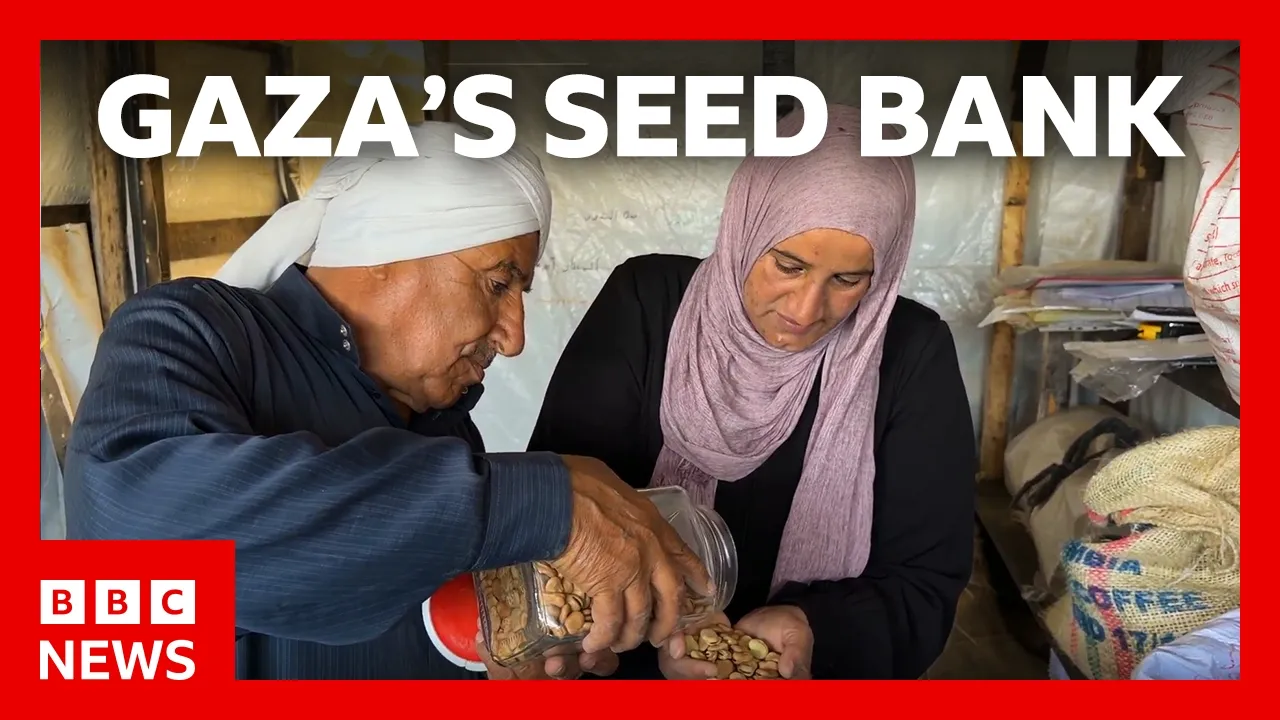

The ongoing conflict in Gaza has resulted in significant damage to the region's infrastructure, leading to a severe crisis in the food supply chain. In response, many residents have turned to farming as a means of self-sufficiency, with some individuals even cultivating crops in makeshift gardens and on rooftops. A small seed bank, established by Salama Muhammad and his daughter in 2017, has been playing a vital role in supporting these efforts by collecting and preserving local seeds.
However, the seed bank's work is hindered by the restrictions imposed on the importation of farming materials, including seeds, fertilizers, and nursery soil. The scarcity of these essential resources has further exacerbated the crisis, making it challenging for farmers to maintain their crops. Moreover, the exhausted soil and lack of access to basic necessities have pushed many farmers to the brink of collapse. The International Committee of the Red Cross has expressed concerns about the situation, emphasizing the need for urgent action to address the unreliable food supply and promote food security in the region.
Despite these challenges, the seed bank's efforts have started to bear fruit, with many farmers now able to grow their own food and achieve a degree of self-sufficiency. The seed bank's work is also helping to promote biodiversity in the region by preserving local seeds and supporting the growth of a wide range of crops. However, the disappearance of local seeds and the lack of access to farming materials remain significant concerns, and it is essential that these issues are addressed in order to ensure the long-term sustainability of farming in Gaza. The producer of the seed bank is working hard to overcome these challenges and provide farmers with the resources they need to succeed.