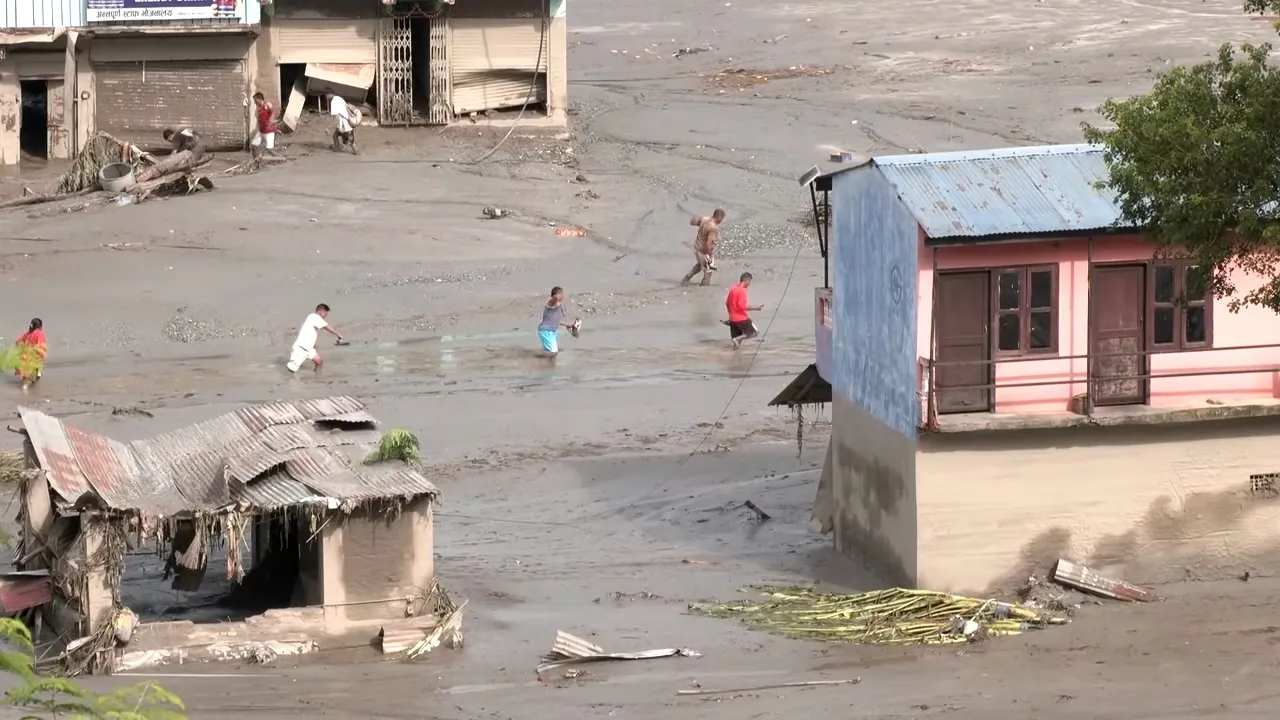

When nature strikes with absolute force, the boundary between safety and catastrophe vanishes in an instant. Along the high-altitude border separating Nepal and China, the sudden fracturing of a massive glacier has unleashed a devastating disaster that has rewritten the geography of local communities and left thousands of families in mourning.
The catastrophic collapse of the ice shelf triggered a torrential flood of water, rocks, and mud that pulverized everything in its path. With nearly 1,400 confirmed dead and upwards of 5,000 individuals still officially listed as missing, the scale of the tragedy is difficult to comprehend. For parents like Ajay Gupta, whose daughter was swept away by the torrent, the passage of time has not diminished the urgency of the situation. He joins local authorities who tirelessly search through the thick, concrete-like mud that now covers the valley floor. While medical experts warn that the window to survive such extreme exposure has largely closed, the community's resolve remains unbroken. Specialized teams continue their efforts to rescue anyone who might have miraculously found shelter amidst the ruins, battling unstable terrain and freezing temperatures daily.
Amidst the overwhelming grief, Ajay clings to a fragile hope that his daughter will be found alive. This tragedy serves as a grim reminder of the volatile nature of mountain environments and the human cost of environmental instability.

