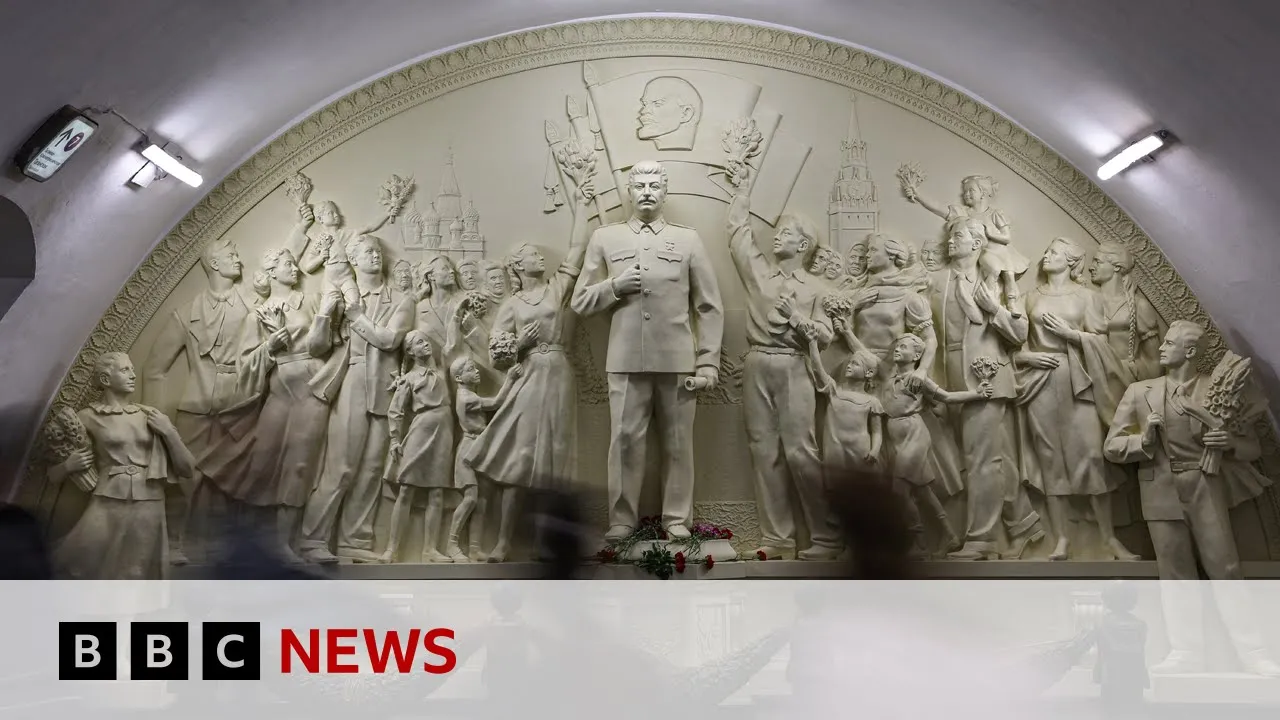

The Russian government's efforts to revise the past have sparked controversy and debate. The recent installation of a new statue of Joseph Stalin, a former leader of Russia, has been met with mixed reactions. While some people view Stalin as a strong leader who contributed to Russia's growth and development, others see him as a brutal dictator responsible for the deaths of millions of people. The government's decision to rehabilitate Stalin's image has been criticized by many, who argue that it is an attempt to whitewash the country's dark past and gloss over its human rights abuses. The Soviet Union, which was a country that once existed in Russia, is also being reevaluated. Some people believe that the Soviet Union was a great power that should be remembered with pride, while others see it as a repressive regime that stifled individual freedoms and creativity. The government's efforts to revive the Soviet Union's legacy have been met with skepticism by many, who worry that it is an attempt to undermine the country's democratic institutions and promote a nationalist agenda.
The government's actions have also been seen as an attempt to distract from the country's current problems, such as the ongoing conflict in Ukraine and the economic sanctions imposed by the West. By focusing on the past and revising its history, the government may be trying to create a sense of national unity and purpose, but it is also risks alienating those who are critical of its actions. The debate over the past and its interpretation is complex and multifaceted, and it is likely to continue for some time. As the government continues to shape the narrative of Russia's past, it is essential to remember the importance of historical accuracy and the need to confront the country's dark past in order to build a better future.