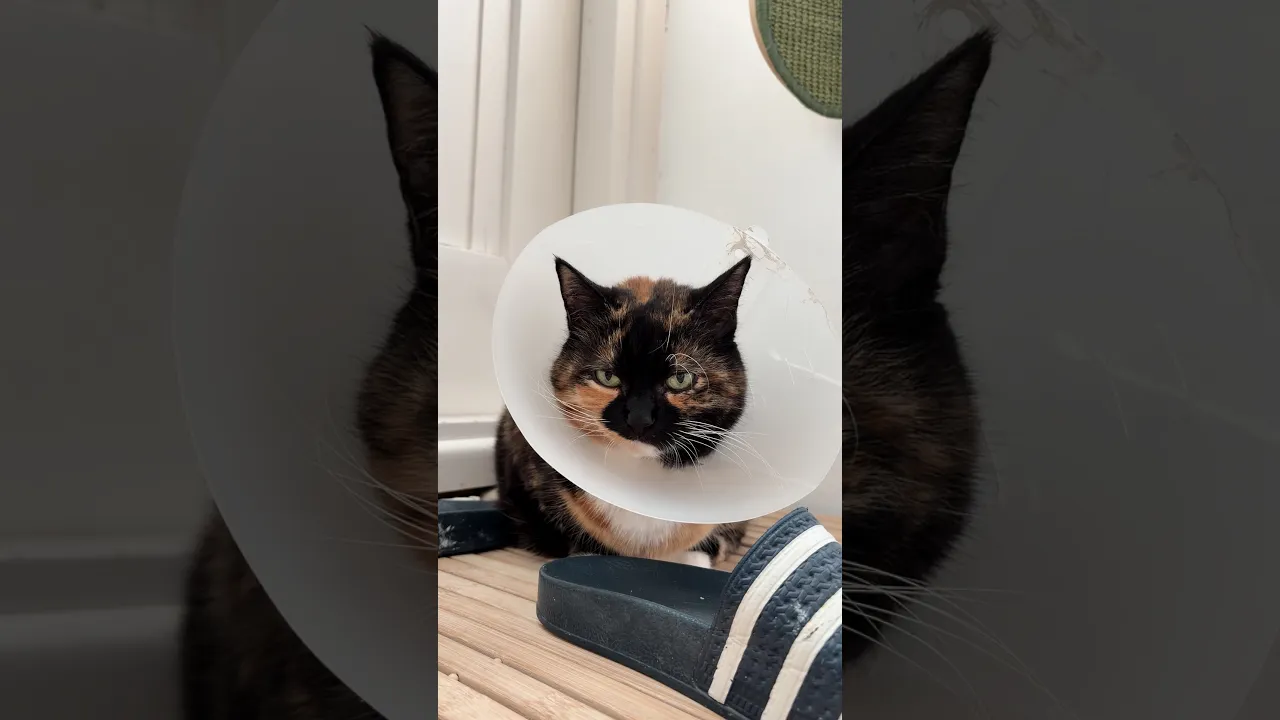

When Taylor was a kitten, a veterinarian fitted her with a plastic cone to safeguard her neck during the brief recovery period following a minor procedure. The device was a temporary necessity, designed solely for medical purposes.
Over time, the cat developed an unexpected habit: she began to don the cone of her own accord, a clear sign of being self‑trained. Rather than viewing the cone as a restriction, Taylor treats it as a personal ritual, a whimsical treat she offers herself. The faint scratching of the plastic against the hardwood becomes her cue, alerting her owner that "cone time" is imminent. During these episodes, Taylor adopts a distinctly playful demeanor, darting around the living room with a silly swagger that betrays a conscious desire for amusement. She knows precisely when to end the session, often delivering a subtle head shake as a polite request for removal. Observers suggest this behavior allows her to relive the carefree exuberance of her kittenhood, transforming a clinical accessory into a source of daily delight.
The phenomenon has captured the imagination of pet enthusiasts online, sparking discussions about animal agency and the ways pets repurpose human‑made objects for their own enrichment.