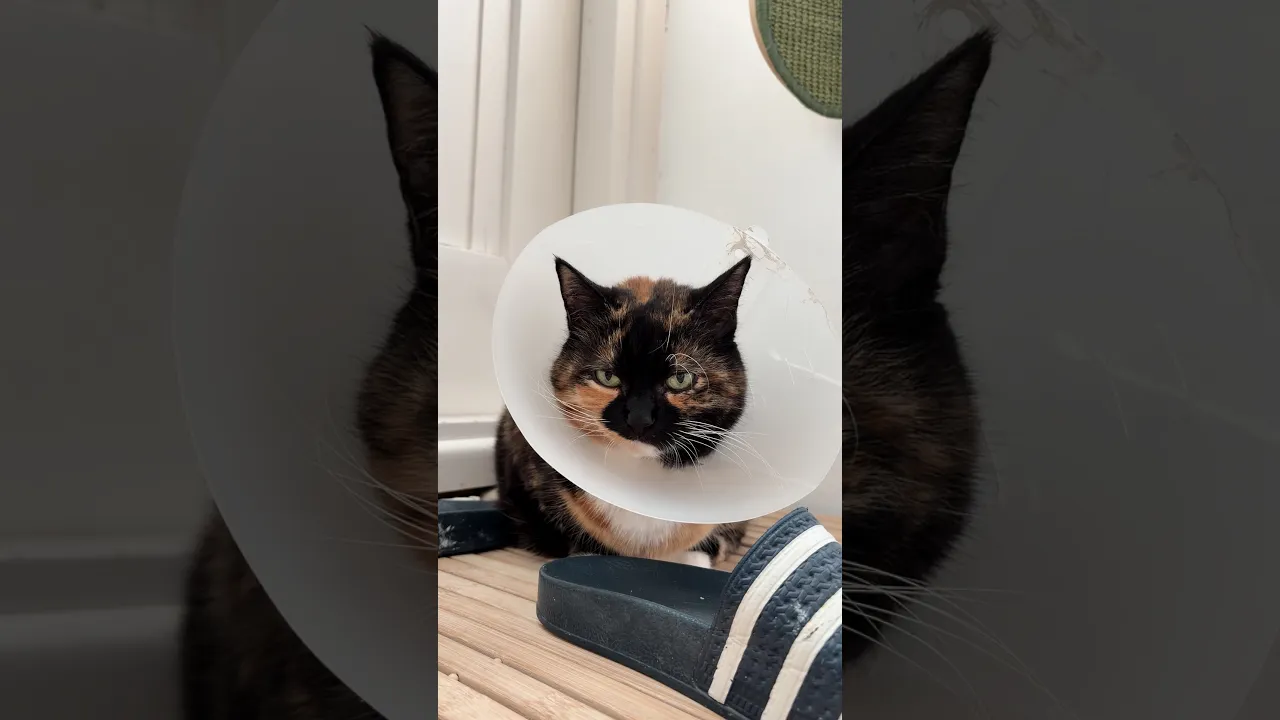

Thirteen years ago, Taylor’s owner recalled the day a modest plastic cone was placed around the kitten’s neck to ensure a smooth recovery after a routine veterinary procedure. The cone, intended as a fleeting safeguard, was soon to become an unlikely centerpiece of the cat’s daily narrative.
What began as a necessary medical accessory evolved into a distinctive ritual when Taylor, displaying remarkable self‑trained ingenuity, started to slip the cone onto herself. Far from a mere habit, this act has morphed into a deliberate treat—a moment of self‑indulgent play that she initiates at will. The subtle scratching of the cone against the floor serves as an auditory cue, informing her human companion that “cone time” is about to commence. In these interludes, Taylor adopts an exuberantly playful and silly demeanor, sprinting through the house with a confidence that suggests she is fully conscious of the absurdity and joy of the act. When satiated, she offers a gentle head shake, a polite yet unmistakable signal that the episode should conclude. Many interpret this behavior as a nostalgic attempt to relive the unbridled curiosity of her kitten days, effectively recontextualizing a clinical tool into a source of personal amusement.
The story has resonated across social platforms, prompting conversations about animal autonomy, the reinterpretation of human‑made objects, and the subtle ways pets enrich the lives of those who share their homes.