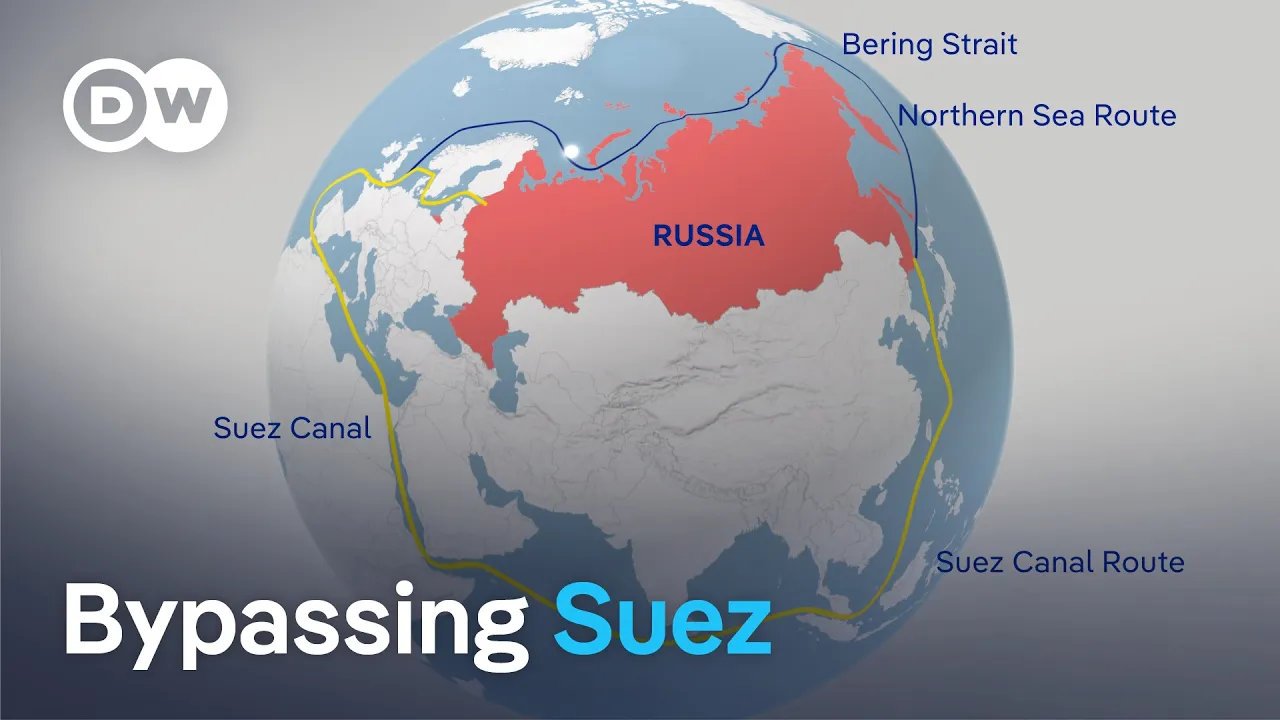

Imagine shipping goods from Asia to Europe in almost half the usual time. A South Korean container vessel is currently testing a freezing Arctic path known as the Northern Sea Route. This bold voyage could redefine global trade by avoiding long, dangerous detours.
For decades, major shipping companies relied on the Suez Canal to move cargo efficiently between continents. However, recent military conflicts and security threats in the Red Sea created a massive disruption for global supply chains. Ships had to travel thousands of extra miles around the southern tip of Africa, adding high fuel expenses and long delays. The Arctic path offers a dramatic shortcut, but it comes with severe operational challenges. Waters are only navigable during a narrow climate window in late summer when ice melts enough for standard cargo ships. Even then, transit requires an expensive Russian icebreaker to guide ships safely through treacherous passages. This creates significant geopolitical tension, as Russia controls the passage and charges high fees for every trip. Shipping companies must also pay an expensive tariff to cross these northern waters. Because giant container ships cannot fit through shallow Arctic waters, smaller ships must be used, which reduces total profit. These heavy costs and physical limits raise serious questions about the long-term viability of using the icy north as a reliable commercial chokepoint bypass.
While the Arctic sea route cuts travel days significantly, high risks and political hurdles remain. Global traders will watch this South Korean test run closely before committing major fleets to the frozen north.

