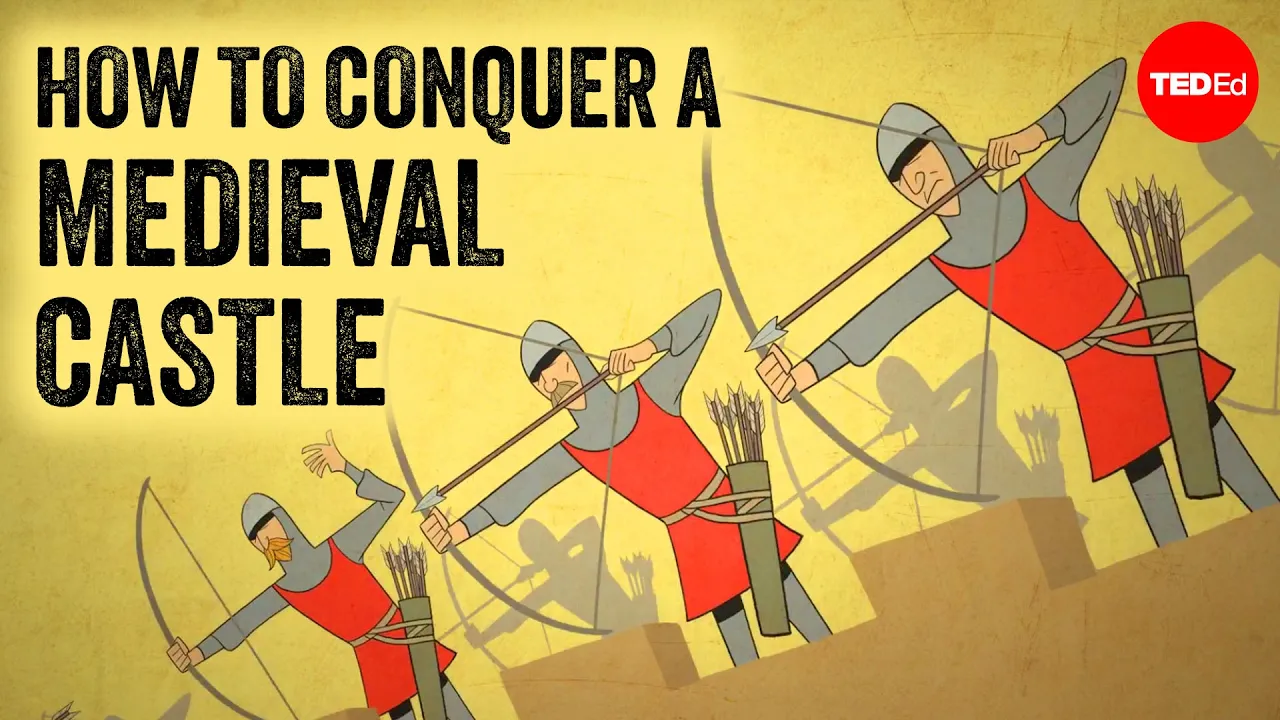

King Robert the Bruce of Scotland launched a siege against England's Carlisle Castle in 1315, but his men faced a series of challenges, including a relentless downpour and the castle's well-designed defenses. The Scots tried to fill the moat with corn husks, but they floated away, and their attempt to build a massive siege tower was thwarted by the English, who had erected wooden scaffolds to heighten the castle walls. Despite their efforts, the Scots were unable to breach the castle walls, and they retreated after just 11 days. This siege was a prime example of how medieval European castles could stand firm against enemy onslaughts.
Castles were not just passive defenses; they were symbols of power, private residences, and hubs of governance intended to impress and intimidate. In fact, they were just as likely to be used for offensive military tactics. Castles regularly served as bases for launching attacks and as a way to control local populations with promises of shelter or threats of violence. While citadels and fortified palaces could be found as early as the 8th century BCE, European castles as we think of them started appearing in large numbers in the late 9th century CE. At this time, the ruling Carolingian Empire was breaking down, and as the monarch's control over his 1 million square kilometer realm disintegrated, nobles began building castles to solidify their regional power.
These early wooden castles followed the motte and bailey design, featuring a central tower built atop a steep mound with a walled yard at the base. Over the following centuries, as castles became centers of social, cultural, military, and political life, their designs grew more varied and complex. By the 12th century, many wooden motte and baileys had been rebuilt with stone, increasing their defense and longevity. Subsequent castles built in stone from the start used curtain walls and gatehouses to enclose the castle yard. And their walls and towers were often coated in a layer of protective limewash, covering their stony grey with a range of colorful tones.
Alongside their scale, visual beauty was a way for castles to project power. Castle Caernarfon in northern Wales was built with bands of different colored stone. And Crusader armies building castles in the Middle East often incorporated elements of intricate Islamic and Byzantine architecture. But as European castles became more widespread, so did technologies to defeat them. Fire had long threatened wooden motte and baileys, and while their stone counterparts were more resistant, their underlying wooden structure was still vulnerable to arson. Battering rams cracked castle doors, siege towers and mining operations thwarted castle walls, and trebuchets launching stones up to 130 kilograms endangered entire structures. Rectangular castle towers were especially vulnerable since their square corners had fewer load-bearing stones.
Fortunately, when the Crusaders returned to Europe from the Middle East, they brought home architectural innovations, including the design for concentric castles. Featuring numerous rings of defensive walls around a central tower, this approach created a circular fortress with multiple layers of siege security. From the 13th century onward, this design reigned supreme, even standing up to the small cannons that had begun spreading across Europe. But by the 15th century, the high towers that once rained arrows on attackers became easy targets for powerful new cannons. While castle builders adapted by making squatter structures with walls up to three meters thick, this kind of construction was prohibitively expensive. By the early 16th century, most local nobles couldn't keep up with the costs, and became reliant on strong centralized rulers who could afford to support modern defenses and large standing armies.